
Tin tức nông sản
4 Key steps for exporting Vietnamese Dragon fruit to South Korea
Th11
The South Korean market (RoK) is one of the most demanding and high-value destinations for Vietnamese agricultural products. To succeed in exporting Vietnamese Dragon Fruit to South Korea, suppliers must adhere to extremely stringent standards, particularly regarding food safety.
Here are the 4 essential steps that ensure your dragon fruit meets the uncompromising import requirements, guaranteeing a premium product that is pesticide residue-free and ready for sale.
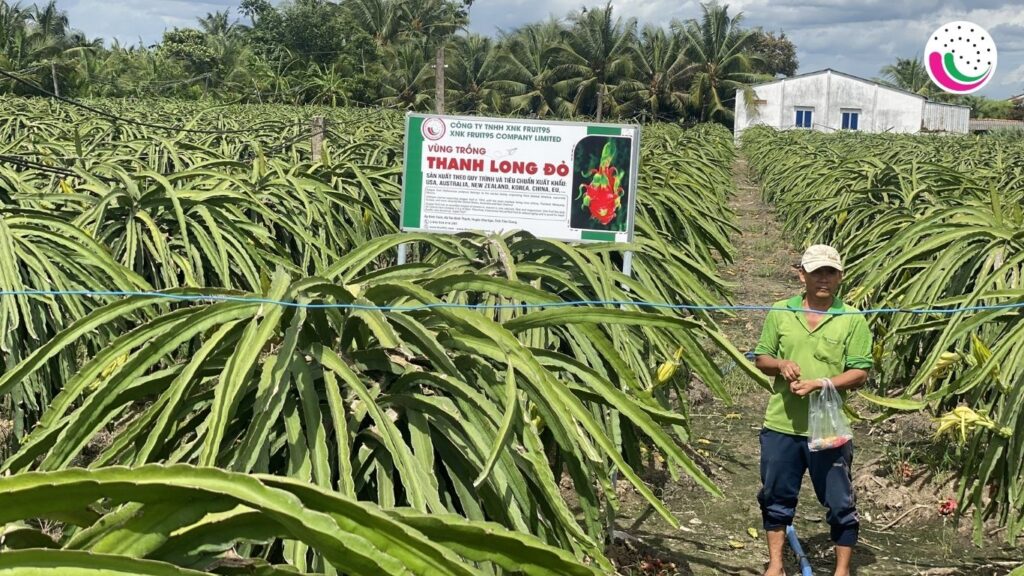
Strict farm management and pesticide residue-free Dragon fruit cultivation
South Korea, as a developed nation, maintains the highest food safety criteria globally. The absolute, non-negotiable requirement for Dragon Fruit export to South Korea is Zero Pesticide Residue.
- Absolute Compliance: Farms and Co-operatives must strictly comply with pest and disease prevention protocols.
- Pesticide Withholding Period: A mandatory and well-documented schedule for pesticide withholding is required to ensure the fruit is free from any residue at harvest.
- Individual Batch Testing: A comprehensive test report must be provided for each growing area (farm/garden) to verify residue levels and quality consistency.
South Korea’s strict testing standards
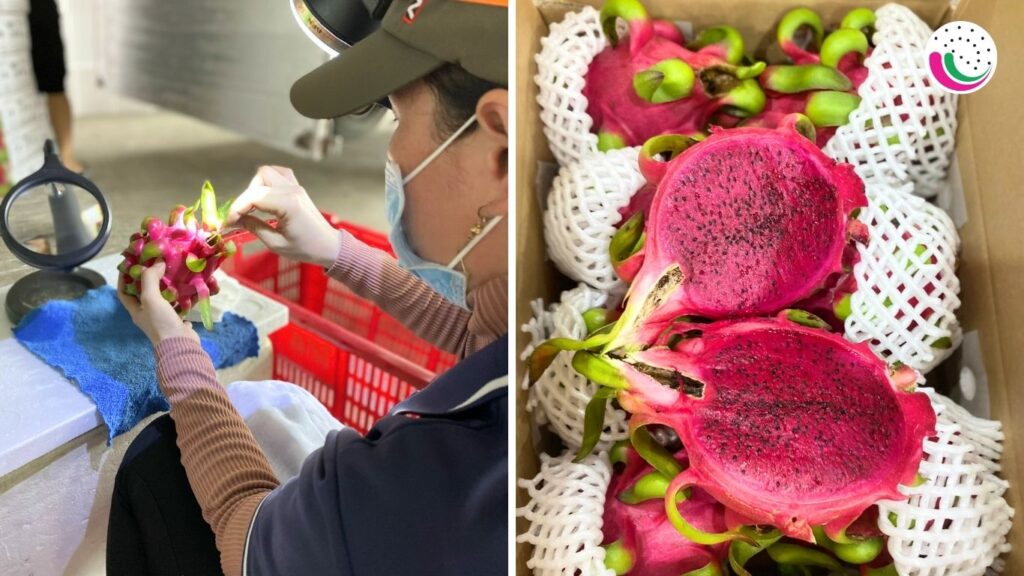
Korean quarantine and inspection procedures are some of the most rigorous globally, making them a benchmark for high-quality fruit export:
- Test Level 1 (Initial Screening): Testing for over 500 chemical substances to meet initial import clearance.
- Test Level 2 (Deep Dive): A more specialized test checking for over 1,000 substances, confirming South Korea’s position as one of the strictest markets for Vietnamese Dragon Fruit.
Pre-Export phytosanitary inspection and handling
The initial stage of inspection happens in Vietnam, focusing on preventing the spread of foreign pests. This meticulous pre-processing phase is vital for successful Dragon Fruit export.
- Quarantine Focus (Vietnam Side): The primary and first requirement during lot inspection is checking for the presence of insects or insect eggs on the fruit’s surface.
- Meticulous Pre-Processing: Extreme care must be taken during the initial handling phase (cleaning, brushing, etc.) to ensure the fruit is perfectly clean before packaging.
Essential certification and KFDA approval
Securing the necessary documentation is a crucial administrative step. These certifications ensure traceability, quality management, and compliance with both Vietnamese and Korean regulatory bodies, especially the Korea Food and Drug Administration (KFDA).
|
Certification/Code |
Description |
Purpose |
| KFDA Export Code | Korean Food and Drug Administration Export Code | Mandatory permit for Dragon Fruit export to South Korea. |
| PUC Code | Plantation Unit Code (Growing Area Code) | Ensures traceability back to the compliant farm/growing region. |
| PHC Code | Packing House Code (Packing Facility Code) | Identifies the certified processing and packaging facility. |
| Food Safety Certificate | Certificate of Food Hygiene and Safety (Factory) | Confirms the factory adheres to strict hygiene protocols. |
| GMP Certification | Good Manufacturing Practice Quality Management System | Validates the facility’s quality assurance system. |
| VHT Factory Certificate | Vapour Heat Treatment Plant Certification | Confirms compliance with VHT requirements for quarantine. |
| Additional Certs | ISO, HACCP, Sedex, FSSC22000, etc. | May be required based on the specific Korean customer’s request. |
Packaging, quality control, and Export pricing
The final step involves meticulous post-harvest handling, quality control, and standardized packaging that protects the fruit and maintains quality during transit.
Packaging and Visual standards
|
Requirement |
Detail |
Importance |
| Carton Specification | 5kg net weight, 6kg gross weight (GW). | Standard market unit for Vietnamese Dragon Fruit. |
| Fruit Count (Popular) | 8, 9, 10, or 11 fruits per 5kg carton. | Ensures consistent fruit size (sizing). |
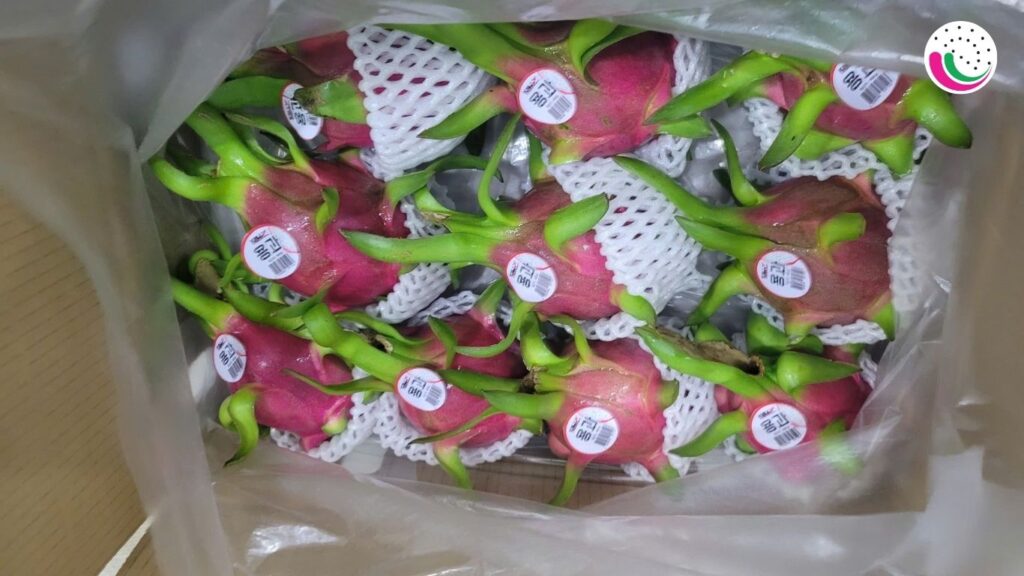
| Protective Features | Must include Insect-proof netting on the carton, MAP Bag (Modified Atmosphere Packaging), Desiccant Bag (Moisture Absorber), Foam Net around each fruit, and Fruit Sticker. | Non-negotiable for Korean quarantine and quality. |
| Fruit Appearance | Must be firm, beautiful, eye-catching, and meet all aesthetic standards. | Crucial for the premium Korean retail market. |
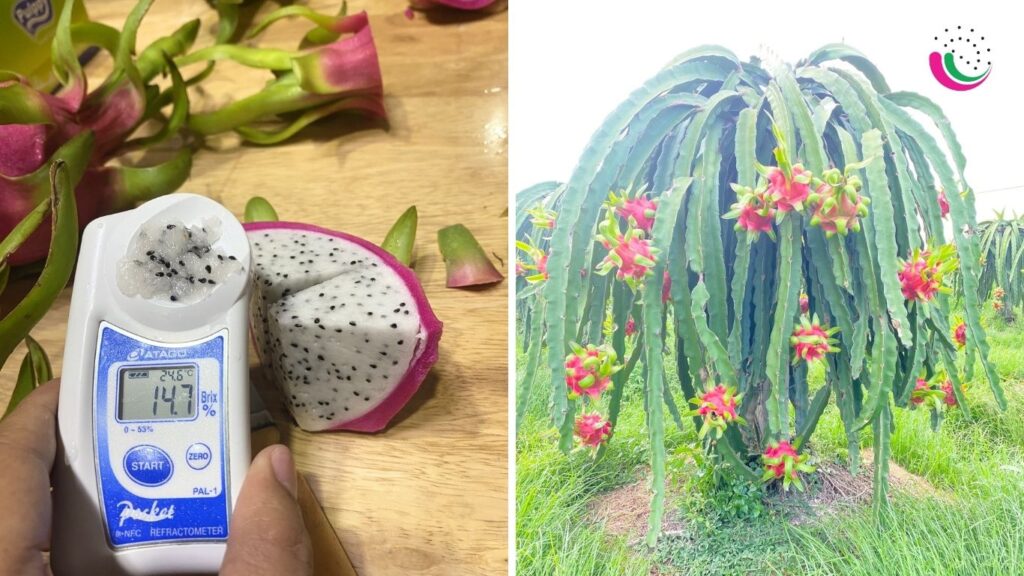
Fruit quality and Sweetness (Brix)
| Variety | Brix Level (Sweetness) |
| White-fleshed Dragon Fruit | 14-16 Brix |
| Red-fleshed Dragon Fruit | 16-18 Brix |
Indicative export pricing (for reference)
Pricing for Vietnam Dragon Fruit export to Korea is determined by season, volume, and logistical factors.
| Term | Variety | Price Range (Indicative) | Note |
| EXW
(Ex Works/Warehouse) |
Red Dragon Fruit | $4.00 – $4.10 USD/kg | Includes carton, VHT treatment, Quarantine, and container loading (Excludes VAT). |
| EXW
(Ex Works/Warehouse) |
White Dragon Fruit | $2.50 – $3.00 USD/kg | Includes carton, VHT treatment, Quarantine, and container loading (Excludes VAT). |
| CNF
(Cost and Freight/Port) |
Red Dragon Fruit | $20 – $22 USD/5kg | Varies based on committed container volume and destination port. |
| CNF
(Cost and Freight/Port) |
White Dragon Fruit | $11 – $15 USD/5kg | Varies based on committed container volume and destination port. |
OURCE OF SUPPLY OF DRAGON FRUIT
If you have not found a reputable and abundant source of fruits. You can refer to and come to FRUIT95’s direct production system to choose for yourself products that meet quality standards, feel secure about the origin at the best price.
Mail: Ad.fruit95@gmail.com / Phone: (+84) 934 01 62 82 Mr.Triển
Mail: Ad1.fruit95@gmail.com / Phone: (+84) 987 364 651 Mrs.Sophia
XNK FRUIT95 COMPANY LIMITED
See more:
- Seize the opportunity to export dragon to Maylaysia
- 5 Steps of exporting Red dragon Cont 20ft to New Zealand
- Nearly 5 tons of red dragon exported to Australia.
- Export more than 1 ton dragon to America
- Đơn hàng xuất khẩu Thanh long sang thị trường Mĩ
- Công ty TNHH XNK Fruit95
- Thanh long đỏ Việt “bay” sang Mĩ
- Sức cạnh tranh Thanh long xuất khẩu
- DRAGON FRUITS EXPORTED TO PHILIPPINES 14/4/24
- DRAGON FRUITS EXPORTED TO MIDDLE EAST 11/4/24
- RED DRAGON EXPORTED TO THE USA 9/4/2024
- DRAGON FRUITS EXPORTED TO RUSSIA 7/4/24
- DRAGON FRUITS EXPORTED TO EU 6/4/24
-
-
-
